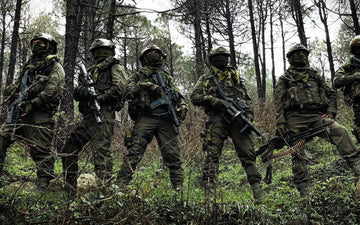
Major Mohit Sharma's life stands as a testament to unwavering patriotism, blending the rigor of military discipline with artistic sensitivity and unyielding courage. As an officer in the Indian Army's elite 1 Para Special Forces (SF), he embodied the ethos of "who dares wins," undertaking perilous undercover missions and leading frontline assaults against terrorism in Jammu and Kashmir. His journey from a music-loving youth in Haryana to a posthumous recipient of the Ashok Chakra—India's highest peacetime gallantry award—captures the essence of sacrifice for the nation. Drawing from official citations, biographical accounts, and contemporary discussions, this article explores his background, career milestones, personal facets, and lasting impact, while addressing emerging family controversies.
Early Life and Education: Foundations of a Multifaceted Personality
Mohit Sharma was born on January 13, 1978, in Rohtak district, Haryana, to Rajendra Prasad Sharma, a banker, and Sushila Sharma, a homemaker. As the second of two sons, with an elder brother named Madhur, he was affectionately called "Chintu" by his family. Raised primarily in Ghaziabad, Uttar Pradesh, where the family resided at 3/27, Sector-2, Rajendra Nagar, Sahibabad, young Mohit displayed a vibrant personality from an early age. He was not only academically inclined but also deeply passionate about music, mastering instruments such as the guitar, mouth organ, and synthesizer. Friends and family recall his melodious voice, often performing songs by legendary playback singer Hemant Kumar in live settings, which earned him admiration beyond the battlefield later in life.
His educational path began at Manav Sthali School in South Extension, Delhi, followed by a brief stint at Holy Angels' School in Sahibabad. In 1988, he joined Delhi Public School (DPS) Ghaziabad, where he completed his Class XII in 1995 with commendable scores. Admitted to Shri Sant Gajanan Maharaj College of Engineering in Shegaon, Maharashtra, for a degree in engineering, Mohit soon realized his true calling lay in serving the nation. He abandoned his engineering pursuits to join the National Defence Academy (NDA) in 1995, a decision that would define his legacy. This early pivot underscores his innate sense of duty, a trait that family members describe as intrinsic to his character.
Entry into the Armed Forces: Forging a Warrior
At the NDA, as part of the India Squadron (often referred to as "Injuns"), Mohit excelled in physical and leadership challenges. He became a champion horse rider, trained under Colonel Bhawani Singh with his favorite mount named "Indira," a boxing titleholder in the featherweight category, and one of the academy's top swimmers. His prowess earned him the prestigious Battalion Cadet Adjutant (BCA) appointment at the Indian Military Academy (IMA), where he was among a select group to meet then-President K.R. Narayanan at Rashtrapati Bhawan.
Commissioned into the 5 Madras Regiment on December 11, 1999, his first posting was in Hyderabad. Early in his career, he served with the 38 Rashtriya Rifles (RR) in Kashmir, engaging in counter-insurgency operations. His performance there earned him the Chief of Army Staff Commendation Medal (COASM) in 2002, recognizing his tactical acumen and bravery under fire. Aspiring for greater challenges, Mohit volunteered for the elite Para Special Forces, joining the 1 Para (SF) in June 2003. From January 2005 to December 2006, he served as an instructor at the Commando Wing in Belgaum, mentoring aspiring commandos and honing his own skills in unconventional warfare.
Notable Operations: The Undercover Legend
Major Sharma's most celebrated feat came in 2004 during an undercover counter-terrorism operation in Kashmir. Disguised as "Iftikhar Bhatt" (some accounts mention "Iqbal Hussain"), he infiltrated the Hizbul Mujahideen network with a meticulously crafted backstory: a Kashmiri youth seeking revenge for his brother's death in a stone-pelting incident allegedly caused by the Army. Growing a beard and long hair, he spoke fluent Kashmiri to build trust with terrorists Abu Torara and Abu Sabzar. After verification, they supplied him with grenades and weapons, proposing he cross the Line of Control (LoC) for training and an attack on an Army outpost.
When suspicions arose, Mohit challenged them directly, dropping his AK-47 and neutralizing both with his 9mm pistol in a daring close-quarters confrontation. This operation disrupted a potential major attack and earned him the Sena Medal for gallantry. His alias and tactics have since become legendary in military circles, often cited as a model for intelligence-driven operations.
Personal Life: Balancing Duty and Passion
Amid his demanding career, Mohit maintained a rich personal life. He married Major Rishima Sharma (commissioned in the Army Service Corps in 2001, now Lieutenant Colonel) in a union that reflected shared commitment to service. His love for music persisted; he performed solo and in groups, bringing levity to the high-stakes world of special forces. Family tributes describe him as a "guiding star," with his nieces imagining him shining beside the North Star each night.
The Final Mission: Supreme Sacrifice in Kupwara
In October 2008, Major Sharma was redeployed to Kashmir with 1 Para (SF). On March 21, 2009, acting on intelligence about infiltrating terrorists in the dense Haphruda Forest of Kupwara district, he led the Bravo Assault Team. Spotting suspicious movement, his unit came under heavy fire from three directions, wounding four commandos: Havildar Sanjay Singh, Havildar Anil Kumar, Paratrooper Shabir Ahmad Malik, and Paratrooper Nater Singh (who later succumbed).
Disregarding personal safety, Mohit crawled forward, rescued two injured soldiers, and lobbed grenades to eliminate two terrorists. Shot in the chest, he pressed on, engaging in hand-to-hand combat to kill two more militants before succumbing to his injuries at age 31. His actions saved lives and neutralized the threat, but cost the lives of four soldiers, including himself.
Awards and Honors: A Decorated Hero
Major Sharma's valor was recognized through several accolades:
| Award | Year | Reason |
|---|---|---|
| Chief of Army Staff Commendation Medal (COASM) | 2002 | Outstanding performance in counter-insurgency operations with 38 RR in Kashmir. |
| Sena Medal (Gallantry) | 2004 | Successful undercover infiltration and neutralization of Hizbul Mujahideen terrorists. |
| Ashok Chakra (Posthumous) | 2009 | Conspicuous gallantry and supreme sacrifice during the Kupwara operation. |
The 2025 film Dhurandhar, starring Ranveer Singh, has drawn scrutiny for allegedly drawing inspiration from Sharma's life—particularly his undercover alias and operations—without acknowledgment. Family members approached courts, but the director denied any direct basis, citing timelines that might implicate political sensitivities (events between 2005-2009, post-Ajit Doval's 2004 retirement). Critics argue this denies credit to a martyr, while supporters view it as creative liberty.
Conclusion
Major Mohit Sharma's life was a symphony of courage, creativity, and commitment, cut short at 31 but immortalized through his deeds. From infiltrating enemy ranks to his final stand in Kupwara, he exemplified the Para SF motto. As India grapples with evolving narratives around its heroes, his tale calls for honoring not just the sacrifice but the support systems that sustain it. In the words of his citation, he displayed "most conspicuous gallantry, inspiring leadership, [and] indomitable spirit." Sharma remains a beacon for the nation he loved and died for.