

India's special forces are among the most feared and respected in the world, and within this elite brotherhood, the 2 Para Special Forces (2 Para SF) holds a place of immense pride and distinction. Nicknamed the "Predators," this battalion is a part of the legendary Parachute Regiment (Special Forces) of the Indian Army — a regiment that has written some of the most glorious chapters in the history of Indian military operations.
Whether it is counter-terrorism missions in Jammu & Kashmir, cross-border strikes, jungle warfare in the Northeast, or high-altitude operations in the Himalayas, the Predators of 2 Para SF have been at the forefront of India's most daring and secretive military operations. For SSB aspirants and defence enthusiasts, understanding the legacy, structure, and operations of 2 Para SF is not just fascinating — it is essential knowledge for any future officer of the Indian Armed Forces.
Background: The Parachute Regiment (Special Forces)
To understand 2 Para SF, one must first understand its parent regiment. The Parachute Regiment is one of India's most elite infantry regiments, tracing its origins back to World War II. Over the decades, certain battalions within the Parachute Regiment were designated as Special Forces units, trained and equipped to conduct unconventional warfare, direct action missions, special reconnaissance, and counter-terrorism operations.
The Special Forces battalions of the Parachute Regiment include the 1 Para SF, 2 Para SF, 3 Para SF, 4 Para SF, 9 Para SF, 10 Para SF, and 21 Para SF, among others. Each battalion carries its own identity, battle honours, and nickname. While 1 Para SF is known as the "Andhis" (Storms), and 4 Para SF is called the "Mighty Daggers," 2 Para SF has earned the fearsome title of the "Predators" — a name that perfectly encapsulates their aggressive, swift, and lethal approach to warfare.
Raising and History of 2 Para SF
The 2nd Battalion, The Parachute Regiment (Special Forces) has a rich and storied history rooted in the broader legacy of the Parachute Regiment of India. Like all Para SF units, 2 Para SF evolved from conventional airborne infantry into a dedicated special operations force as India's security needs changed and grew more complex through the latter half of the 20th century.
The transition of select Parachute Regiment battalions into full-fledged Special Forces units was a strategic decision by the Indian Army to create a cadre of warriors who could operate deep behind enemy lines, conduct precision raids, gather strategic intelligence, and neutralise high-value targets — missions that conventional infantry simply was not trained or equipped for.
2 Para SF has participated in virtually every major conflict and counter-insurgency operation that India has been involved in since its raising, building a formidable operational reputation over decades of service to the nation.

The Nickname: "Predators"
The nickname "Predators" is not merely a title — it is a statement of operational philosophy. A predator does not wait to be found. It hunts. It stalks its target with patience, precision, and absolute lethality. The name reflects the core ethos of 2 Para SF warriors — men who are trained to go into the most dangerous environments on earth, find their targets, and eliminate them with ruthless efficiency before disappearing back into the shadows.
The Predators are known for their aggression in contact, their ability to operate in small teams far from support, and their capacity to dominate any terrain — jungle, desert, mountain, or urban. The name sends a clear message to adversaries: when the Predators are on your trail, there is no escape.
Selection and Training
Joining 2 Para SF — or any Para SF battalion — is one of the most gruelling undertakings in the Indian Army. The selection and training process is designed to break ordinary soldiers and forge extraordinary ones.
Pre-Para Training
Before a soldier can even attempt Para SF selection, he must complete basic Pre-Para training at the Parachute Regiment Training Centre (PRTC) in Bangalore. This phase weeds out the physically and mentally weak through intense physical fitness tests, obstacle courses, long-distance runs with full combat load, and psychological assessments.
Parachute Jump Training
All Para SF soldiers are airborne qualified. They undergo extensive parachute jump training, including both static-line and free-fall jumps. Advanced Para SF operators are trained in HAHO (High Altitude High Opening) and HALO (High Altitude Low Opening) parachute techniques, which allow them to insert covertly into enemy territory from high altitudes without detection.
Special Forces Selection
The actual Para SF selection is a months-long ordeal that tests every dimension of a soldier's capability — physical endurance, mental resilience, tactical intelligence, survival instincts, and teamwork. Candidates undergo:
- Long-distance marches with heavy loads over difficult terrain
- Swim tests and water-based obstacle courses
- Sleep deprivation and stress inoculation drills
- Navigation exercises in unfamiliar terrain with minimal equipment
- Combat fitness tests under simulated battle conditions
The dropout rate is exceptionally high. Only the finest soldiers make it through.
Special Forces Training
Those who pass selection undergo an intensive Special Forces qualification course that includes:
- Close Quarter Battle (CQB) and hostage rescue techniques
- Demolitions and explosives handling
- Sniper training
- Combat diving and underwater operations
- Signals and communications
- Survival, Evasion, Resistance, and Escape (SERE) training
- Intelligence gathering and special reconnaissance
- Foreign weapons handling
- Medical training — Para SF soldiers are trained as combat medics capable of treating casualties under fire
This comprehensive training makes a Para SF soldier a one-man army capable of operating independently behind enemy lines for extended periods.
Role and Missions of 2 Para SF
The Predators of 2 Para SF are trained and tasked to conduct the full spectrum of special operations missions. These include:
1. Direct Action (DA)
Precision offensive strikes against high-value targets, enemy command posts, weapon depots, and terrorist hideouts. These missions are fast, violent, and surgical.
2. Special Reconnaissance (SR)
Covert intelligence gathering deep in enemy territory. 2 Para SF teams can operate for days or weeks in denied areas, observing enemy movements and reporting back to higher command without being detected.
3. Counter-Terrorism (CT)
The Predators are extensively trained and deployed for counter-terrorism operations, particularly in Jammu & Kashmir and the Northeast. They operate in small teams to track down, isolate, and neutralise terrorist elements with minimal collateral damage.
4. Hostage Rescue
In situations where Indian nationals or security personnel are taken hostage, Para SF units including 2 Para SF are among the first responders, trained in complex hostage rescue operations in buildings, aircraft, and jungle environments.
5. Unconventional Warfare (UW)
Operating in enemy-held territory to organise and support resistance movements, conduct sabotage, and destabilise enemy infrastructure.
6. Foreign Internal Defence (FID)
Training and advising the military forces of friendly nations — a role that enhances India's strategic partnerships across South Asia, Southeast Asia, and Africa.
7. Cross-Border Operations
Like their sister battalion 1 Para SF which conducted the famous 2016 Surgical Strikes, Para SF units including 2 Para SF are trained and ready for cross-border precision operations against terrorist launch pads in Pakistan-Occupied Kashmir and along India's other sensitive borders.
Weapons and Equipment
The Predators of 2 Para SF are equipped with some of the finest weapons and equipment in the Indian Army's arsenal. While exact inventories are classified, Para SF units are known to operate with:
- Assault Rifles: SIG Sauer 716, AK-103, Colt M4A1, Tavor TAR-21
- Submachine Guns: MP5, MP7 for CQB operations
- Sniper Rifles: Accuracy International AXMC, Dragunov SVD, Barrett M82 (anti-materiel)
- Light Machine Guns: FN Minimi, PKM
- Grenade Launchers: M203, GP-25 underbarrel grenade launchers
- Explosives: C-4, IEDs for demolition tasks
- Night Vision Devices (NVDs): Latest generation monoculars and binoculars for night operations
- Communication Equipment: Encrypted tactical radios, satellite communication systems
- Specialised Gear: Combat diving equipment, parachute rigs (HALO/HAHO), fast-rope systems, and medical kits
Para SF soldiers are also known to carry customised load-outs depending on the mission profile, and they regularly train with weapons captured from adversaries to maintain familiarity.
Uniform and Insignia
Like all Para SF units, the soldiers of 2 Para SF wear the iconic maroon beret — a symbol of the airborne brotherhood. The maroon beret is one of the most coveted items of dress in the Indian Army and is earned only after completing parachute training.
Para SF soldiers also wear the distinctive Parachute Regiment badge — the winged horse Pegasus — along with the "Special Forces" tab on their uniform, marking them as members of India's most elite fighting force.
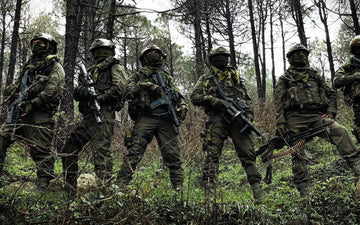
During operations, the Predators are typically dressed in mission-appropriate camouflage — jungle DPTE camouflage for forest operations, multi-terrain pattern uniforms for mountain and desert environments — and carry minimal identifying insignia to maintain operational security.
Operational Theatres
The Predators of 2 Para SF have been deployed across India's most challenging and sensitive operational environments:
Jammu & Kashmir
Counter-insurgency and counter-terrorism operations in the Kashmir Valley and along the Line of Control (LoC) have been a defining mission for Para SF units. The Predators have conducted countless cordon-and-search operations, encounter missions, and targeted strikes against terrorist leadership in this theatre.
Northeast India
The dense jungles of states like Nagaland, Manipur, Mizoram, and Assam have been another major operational area for Para SF units. Insurgent groups like ULFA, NSCN, and others have faced the elite maroon berets in some of the most difficult jungle warfare conditions imaginable.
High-Altitude Himalayan Terrain
Para SF units are trained to operate in extreme high-altitude conditions, including glaciated terrain above 15,000 feet. Their capability to conduct special operations in the Himalayas gives India a significant strategic edge over adversaries.
Overseas Deployments
Indian Para SF units, including elements from 2 Para SF, have participated in UN peacekeeping missions and joint exercises with special forces from the USA (Green Berets, Rangers), Russia (Spetsnaz), UK (SAS), France (Foreign Legion), Israel (Sayeret Matkal), and several other nations, enhancing interoperability and learning global best practices in special operations warfare.
Joint Exercises and International Engagements
2 Para SF, as part of India's broader special operations community, regularly participates in high-profile bilateral and multilateral military exercises. These exercises sharpen their skills, expose them to diverse tactics, and build India's defence diplomacy. Some notable exercises involving Para SF units include:
- Exercise Vajra Prahar (India-USA Special Forces exercise)
- Exercise Indra (India-Russia joint exercise)
- Exercise Shakti (India-France joint exercise)
- Exercise Mitra Shakti (India-Sri Lanka joint exercise)
These exercises validate the Predators' status as a world-class special operations unit capable of working seamlessly with allied forces.
2 Para SF and the SSB Interview
For SSB aspirants, the existence and legacy of units like 2 Para SF carry deep significance. Here is why:
1. Officer Leadership Philosophy: Para SF officers are expected to lead from the front at all times. The qualities assessed in SSB — Officer Like Qualities (OLQs) such as courage, initiative, effective intelligence, and leadership — are the same qualities that define a Para SF commander.
2. Physical Fitness Standards: If you aspire to serve in or command a Para SF unit someday, your physical fitness must be at the highest level from day one of your service. SSB assessors look for candidates who demonstrate physical robustness and a warrior mindset.
3. Knowledge of Special Forces: Understanding India's special forces — their structure, history, roles, and operations — reflects the kind of informed, committed aspirant that the Indian Army wants as its future officers. Be ready to discuss Para SF, their operations, and India's special forces doctrine in your Personal Interview (PI).
4. Motivation and Clarity of Purpose: Many of the finest Para SF officers began their journey with a burning desire to serve in elite units. Knowing what you want to achieve in the Army and articulating it clearly during SSB can set you apart from thousands of other candidates.
Inspiring Legacy and Gallantry Awards
The Predators of 2 Para SF have earned numerous gallantry awards over the years, including Vir Chakras, Shaurya Chakras, Sena Medals, and Chief of Army Staff Commendation Cards for acts of exceptional bravery and professional excellence during operations. These awards are a testament to the extraordinary courage and competence of the men who wear the maroon beret with "2" on their shoulders.
The names of individual Predators who have fallen in the line of duty are etched in the history of the Parachute Regiment, and their sacrifice continues to inspire every new generation of Para SF soldiers who follow in their footsteps.
Conclusion
The 2 Para Special Forces — the Predators — represent the very best of what the Indian Army can produce. They are warriors forged in the fire of the most demanding training on the planet, seasoned in the crucible of real operations, and driven by an unbreakable commitment to national security. Their motto, their maroon beret, and their fearsome nickname are not just symbols — they are the result of years of sacrifice, discipline, and an unrelenting pursuit of excellence.
For every SSB aspirant reading this, let the story of the Predators be a source of inspiration. The path to wearing the uniform of an Indian officer is demanding — but so is everything worth achieving. Study hard, train hard, and walk into that SSB with the heart of a Predator.
Jai Hind.



Nice information, glad to read